Chevrolet In The News Circa 2013-2014
For a number of years Chevrolet in the News was a site to visit to learn about everything Chevrolet, and maybe even other brands under the General Motors umbrella.
Content is from the site's 2013 -2014 archived pages providing a glimpse of what this site offered its visitors..
About
Now is an exciting time for Chevrolet. Despite economic factors placing great strain on Chevrolet production, on dealers, and on numerous aspects of their operations, consumers will soon be seeing incredible changes at the automaker, including the new Chevrolet Volt plug-in electric vehicle and other models that will truly surprise new car buyers and push the envelop for innovation in automotive design and marketing.
At Chevrolet in the News, we are going to be blogging about everything coming out of Chevy’s headquarters, including discussing their products, their dealers, and their strategies in the auto market. Keep checking back to get all the Chevy new and information you’ve been craving.
An aside: My brother is a design snob whether it is cars, furniture, architecture, fashion, or technology. He is always on the outlook for the newest innovation. I remember when Salesforce in the early 2000's began. Salesforce was right in the midst the dramatic ascent of the Fourth Industrial Revolution as it continues to change the way people work with the use of robotics, AI, the Internet of Things, and more. Salesforce is the world’s #1 Customer Relationship Management (CRM) platform. Their cloud-based applications for sales, service, marketing, and more supposedly don’t require IT experts to set up or manage. On their website they tell interested parties to simply log in and start connecting to customers in a whole new way. But for a large company, such as the one my bother started, you really need a Salesforce implementation consultant to improve the business processes and workflows for optimizing sales. Needless to say, Salesforce dramatically helped his business's productivity right away. So much so, that in 2014 he bought a 2014 Chevrolet Camaro Z/28. He loved this website for keeping up with Chevrolet's new introductions. However, as with life, situations change and evolve. My brother is now eyeing the 2019 Chevrolet Corvette Z06. Whoopie!
Write for Chevrolet in the News
We’re always on the lookout for adding talented, interesting writers to the Chevrolet in the News lineup. If you have something to say about cars or about the automotive business in general, we would love to add you as a contributor.
Currently we’re looking to build exposure, add high quality of content, and the breadth of automotive-related topics covered here, as it pertains to Chevrolet and General Motors in particular. Should you have additional information, experience, or interest in other brands/topics outside the editorial focus of Chevrolet in the News, don’t fret, we have other blogs where your contributions would be much appreciated! Additional blogs include topics involving Ford, Honda, Hyundai, Dodge, Jeep, Chrysler, Toyota, and much more.
Contributors can write as much or as little as they wish, and included in every post is your author byline. This is a great opportunity for unpublished authors wanting to gain some additional exposure and add to their portfolio.
Having a strong writing ability in the English language is crucial, but we welcome contributors from the US, Europe, and developing automotive markets to add their perspective of Chevrolet and General Motors.
At this point, contributors will NOT be paid, but a link to your personal website will be allowed from your byline to help get you exposure. In addition, we request that all content is original and not present on any other website. We also reserve the right to edit your content to ensure it falls in line with the editorial direction and nature of this blog.
For anyone interested in contributing, fill out the contact form below. Responses will remain confidential.
Thanks for your interest in contributing to Chevrolet in the News.
2014 NEWS
2014 Chevy Corvette Dominates Daytona with First Four Finishers
by Chevrolet in the News on January 27, 2014
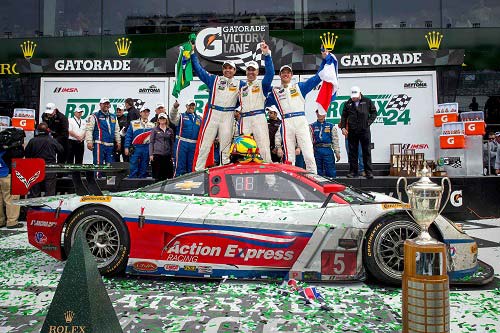
With the United SportsCar Championship looking to kick off its season with a splash, it was Team Corvette that kicked its rivals to the curb during the recent Rolex 24 endurance race.
Refreshed 2014 Chevy Malibu Retains 5-Star Safety Score
by Chevrolet in the News on January 24, 2014
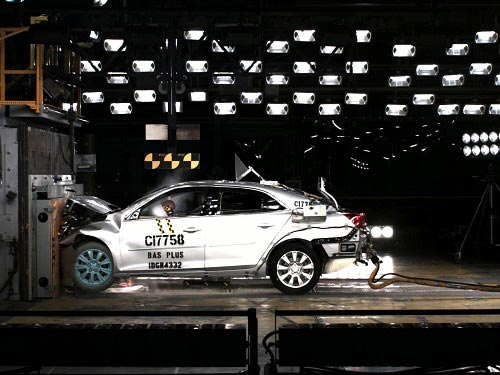
The 2014 Chevy Malibu recently received its second consecutive 5-Star Overall Vehicle Score for occupant protection from NHTSA. Just like last year, the Malibu did so with 5-star scores for frontal-crash and side-crash protection, complemented by a 4-star performance in NHTSA’s rollover test. Certainly helping matters were features like an ultra-high-strength steel safety cage and 10 standard airbags, but the 2014 Chevy Malibu also doesn’t stint when it comes to technology benefits.
New 2014 Chevy Camaro Z/28.R Is Up for the Challenge
by Chevrolet in the News on January 21, 2014
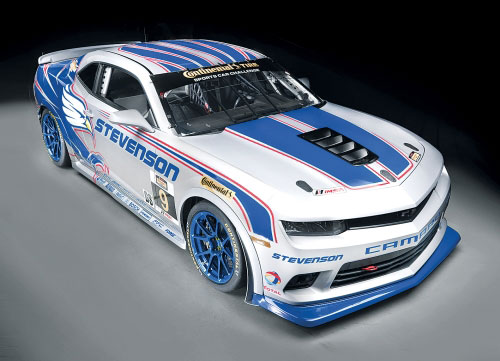
That would be IMSA’s Continental Tire SportsCar Challenge, of course, which this season welcomes the brand-new 2014 Chevy Camaro Z/28.R to the starting grid. In fact, the series’ first race is just days away, with the green flag scheduled to wave on January 24 at the Daytona International Speedway; on the other hand, the new Z/28′s racing history extends back decades.
Auctioned 2014 Chevy Camaro Z/28 No. 1 Earns $650K for Charity
by Chevrolet in the News on January 16, 2014
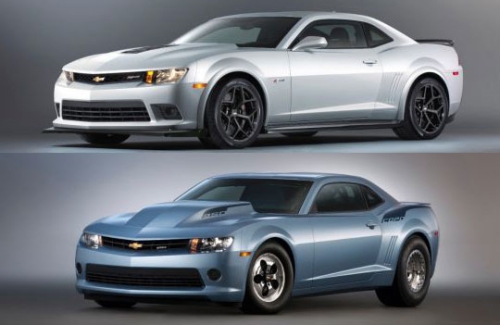
The 2014 Chevy Camaro has scored another win in its ongoing battle for muscle-car supremacy with the Ford Mustang, and this time it was for a particularly good cause. While the first 2015 Mustang GT delivered some $300,000 for charity at the recent Barrett-Jackson collector auction in Scottsdale, Arizona, the first retail 2014 Chevy Camaro Z/28 more than doubled that mark by selling for $650,000.
2014 Chevy Impala, Silverado Selected as Best of the Year by Cars.com
by Chevrolet in the News on January 14, 2014
The Bowtie brand certainly came up big in recent voting for the Cars.com Best Car and Truck of the Year honors: After all, both its full-size sedan, the 2014 Chevy Impala, and its full-size pickup, the 2014 Chevy Silverado, were presented with those trophies recently at the 2014 North American Auto Show in Detroit.
2015 Chevrolet Corvette Z06: Meet the Chevy’s Supercharged Supercar
by Chevrolet in the News on January 14, 2014
<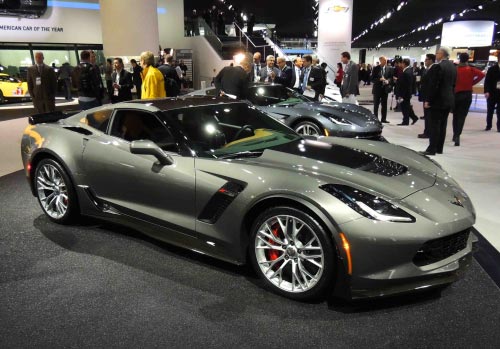
Just hours after learning the 2014 Chevy Corvette Stingray had been named this year’s North American Car of the Year, the Bowtie brand unleashed the next-level of next-gen Corvette performance: the 2015 Chevrolet Corvette Z06. It’s a car that set a new record at GM’s Milford Proving Ground the very first time it hit the track, already living up to the brand’s boast that it’s the most capable Corvette ever.
Pricing Now Set for 2014 Chevy Camaro Z/28
by Chevrolet in the News on January 3, 2014
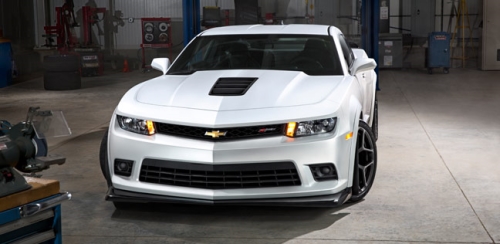
With most of the country trapped in a deep freeze, this is probably a good time for an update on what should be one of the hottest new cars of the year: the 2014 Chevy Camaro Z/28. Of course, gearheads around the world already knew it would be the most track-capable production Camaro ever sold, but now the Bowtie brand has announced a starting price for the car of $75,000, including destination charges.
Autobytel.com: 2014 Chevy Corvette Stingray Is Top Sports Car
by Chevrolet in the News on January 2, 2014
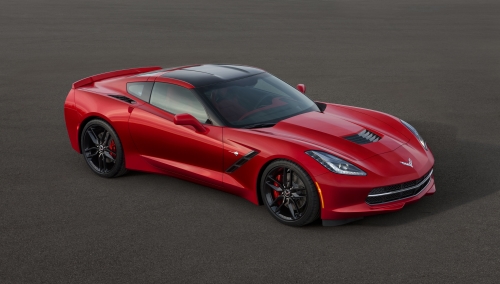
Starting off the new year much the same way it finished the last one, the 2014 Chevy Corvette Stingray has been named the Sports Car of the Year by Autobytel.com. According to Michelle Naranjo, editor for the popular auto-buying site, it was the car’s “progressive, aggressive all-new design and performance advancements,” combined with some six decades of tradition that gave the new Stingray the edge over finalists like the Porsche Cayman and Jaguar F-Type.
IIHS: 2014 Chevy Spark Is Segment’s Only Top Safety Pick
by Chevrolet in the News on December 19, 2013
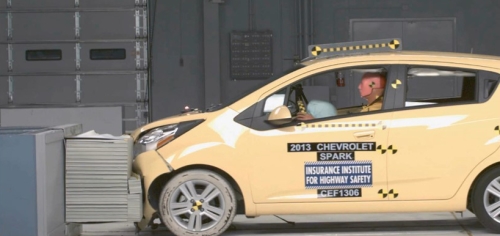
With the first round of testing now complete for the new model year, the 2014 Chevy Spark has become the only entry from the “Minicar” category to earn Top Safety Pick status from the IIHS. In doing so, the Spark achieved top scores for protecting passengers in moderate front-overlap impacts, side-crash impacts and rollovers, as well as for the performance of its head-restraint system. The baby of the Bowtie brand then really showed its mettle by passing the IIHS’ new evaluation for small front-overlap protection (e.g., when a narrow object like a pole or tree is struck by a vehicle’s front corner).
2014 Chevy Corvette Stingray, Cruze Diesel Honored with Engine Awards
by Chevrolet in the News on December 12, 2013
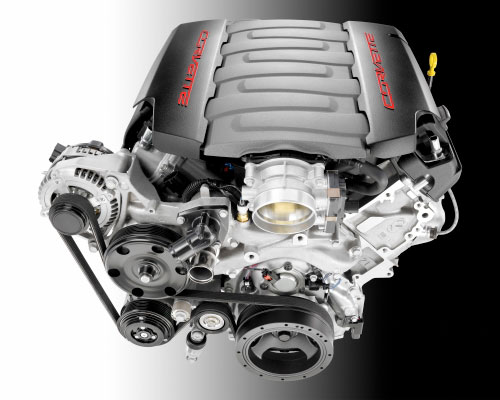
A pair of powerplants from Chevrolet has been named to this year’s 10 Best Engines list from WardsAuto World. Showcasing the breadth of the brand’s offerings, the winners included both the high-performance 6.2-liter V-8 in the new 2014 Chevy Corvette Stingray and the high-efficiency 2.0-liter, four-cylinder turbo diesel available in the 2014 Chevy Cruze.
2013 NEWS
Chevy Malibu Takes Active Approach to Passive Entry
by Chevrolet in the News on April 29, 2013
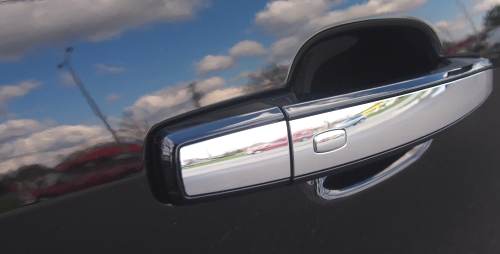
When Chevrolet designed the new 2013 Malibu, a key goal was to provide customers with benefits they wouldn’t normally find in a mainstream midsize sedan—such as four-door passive entry, a feature usually found only on premium vehicles. But then, engineers added an advantage that’s rare on any vehicles.
“This system truly keeps the driver in full control of the car,” said Ron Asmar, lead engineer for vehicle access at Chevrolet. “We investigated fully passive systems where the key fob would automatically unlock the door when a person was within a certain distance, and decided against it. We wanted to make sure that the system prevented the car from unlocking just because the person and fob were close to it, such as when walking through the garage to take the garbage out.”
As a result, the Malibu’s advanced passive-entry system, an option on the Malibu LTZ, relies on a tiny button built into the car’s door handle to unlock the vehicle. One tap unlocks the driver’s door; two will unlock all four doors and the trunk. Of course, that only happens when the Malibu’s key fob is within about three feet of the car. Since each fob is synched to its specific Malibu, “there is practically no chance of false unlocks,” according to the Bowtie brand.
“Available passive entry on all of the doors was a feature we wanted to offer our Malibu customers,” said Phil Carlisle, Chevrolet Malibu product manager. “It’s small things like this that can go a long way in making everyday use of your vehicle easier.”
2014 Silverado High Country Ready to Take on the Lux Trucks
by Chevrolet in the News on May 5, 2013

Chevrolet is expanding its pickup portfolio for the 2014 model year by introducing its most luxurious edition of the Silverado ever. The 2014 Silverado High Country will enter the lineup in a crew cab configuration this fall with exclusive design cues and a choice of two new V-8 engines.
When it arrives, customers will enjoy all the advantages built right into the redesigned Silverado, as well as the kind of accoutrements that more and more truck owners expect in a premium full-size pickup, including:
- Upscale front-end design enhancements like a unique chrome grille, halogen projector headlamps and body-color front and rear bumpers
- Model-exclusive 20-inch chrome wheels, wearing P275/55R20 all-season tires
- Chrome body-side moldings, door handles and exterior mirrors
- Premium cabin cues such as heated and cooled front bucket seats swathed in perforated leather
- Chevrolet’s MyLink infotainment and connectivity system with an eight-inch touchscreen
- A significant audio upgrade, courtesy of Bose
- Technologies like front and rear park assist
Owners can then pick from a pair of V-8 engines from the new Ecotec3 portfolio: The standard motivator is a 5.3-liter unit that makes 355 horsepower and still rings up 23 mpg on the highway, while those looking for more punch can move up to a 6.2-liter V-8 (that’s still waiting on its official power and efficiency specs).
“High Country will be the top model in the Silverado lineup, with a higher level of premium features and materials with a rich, Western-themed appearance,” said Maria Rohrer, Silverado marketing director. “But at the same time, High Country is 100 percent Chevy truck, with the capability and dependability customers have relied on for more than 95 years.”
Chevy Camaro ZL1 Scores as 2013 Automobile All-Star
by Chevrolet in the News on May 21, 2013
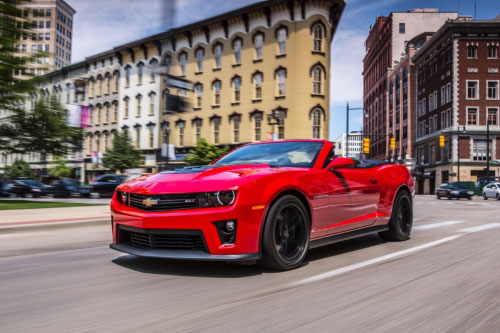
While the upcoming 2014 Chevy Camaro Z/28 is getting plenty of buzz, the 2013 Chevy Camaro ZL1 is getting plenty of acclaim—and a spot on this year’s Automobile All-Stars roster, presented by the long-lived enthusiast publication Automobile magazine.
In writing for the magazine, Michael Jordan (no, not that one) raved about the ZL1’s supercharged V-8 engine, which relies on 580 horsepower and 556 lb.-ft. of torque to deliver the fastest production Camaro ever. The tale of the tape here includes a 0-60 time of 4 seconds, a top speed of 184 mph, the ability to cover the quarter mile in less than 12 seconds, and an elite Nürburgring lap time of 7:41.27.
But what truly elevates the ZL1 above the competition is its road manners. As Jordan further noted, “… the miracle of the Camaro ZL1 is your ability to control it. It’s not refinement we’re talking about (although it indeed is wonderfully refined), but instead the ability to command 580 hp and make use of so much muscle in appropriate circumstances.”
Also coming in for praise were the Camaro’s launch control system, adaptive dampers, massive Goodyear Eagle F1 Supercar tires and sticker price. After all, with an MSRP of $54,350, the Camaro ZL1 is a veritable bargain compared to more expensive foreign sports cars that can’t keep up with its incredible performance. The BMW M6 Coupe, for example, offers less power, a lower top speed and slower 0-60 time, all while costing more than twice as much as the ZL1.
That’s not even mentioning the fact that the Camaro ZL1 was designed from the outset to allow open-air driving, with significant chassis bracing and an available soft top that, according to Chevy, helps serve up “a convertible designed to preserve nearly all the acceleration, road-holding and performance capabilities of the Camaro ZL1 coupe.
2014 Corvette Crowned Pace Car King at Indy 500
by Chevrolet in the News on May 2, 2013
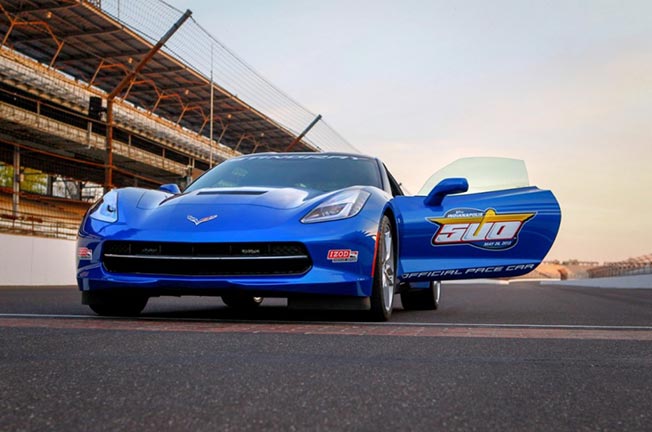
The all-new2014 Chevrolet Corvette Stingray
will find itself in a very familiar position on May 24, 2013: ahead of the pack as the pace car of this year’s Indy 500. It will be a record-setting 12th time that a Corvette has had the honors in Indianapolis, where the Greatest Spectacle in Racing will see its 97th running. As is usually the case, the 2014 Corvette Stingray will need just minor mods to pace the race, too, and those come only in the form of track-mandated safety equipment and strobe lights.
Of course, that’s primarily because the next-gen Corvette will brandish 450 horsepower and 450 lb.-ft. of torque—in its entry model—courtesy of an equally new and advanced 6.2-liter LT1 V-8 engine. Said motivation delivers 0-60 mpg times of under 4 seconds and what will certainly be an Indy-friendly top speed. Yet because the 2014 Corvette’s engine also features technologies like direct injection, continuously variable valve timing and cylinder deactivation, the car is expected to achieve up to 26 mpg on the highway.
Other highlights of the 2014 Corvette Stingray include a seven-speed manual transmission with Active Rev Matching, a five-position Drive Mode Selector, a carbon-fiber hood and roof panel (on coupes), LED accent lighting and an available Z51 Performance Package that adds an electronic limited-slip differential, dry-sump oil system, aero upgrades and more.
Now the car comes standard with instant Indy 500 cred, too.
“It is an honor to help inaugurate the all-new Corvette Stingray at the hallowed Brickyard and further the legacy between Chevrolet and the Indianapolis 500,” said Jim Campbell, GM vice president of Performance Vehicles and Motorsports. “The 2014 Corvette Stingray’s performance was influenced by racing, making this prestigious assignment even more fitting.”
The 2014 Chevrolet Corvette Stingray is expected to go on sale this fall with an MSRP that starts at $51,995 for coupe models and $56,995 for convertibles (destination fee included).
2014 Stingray Starting Point: $51,000
by Chevrolet in the News on April 26, 2013
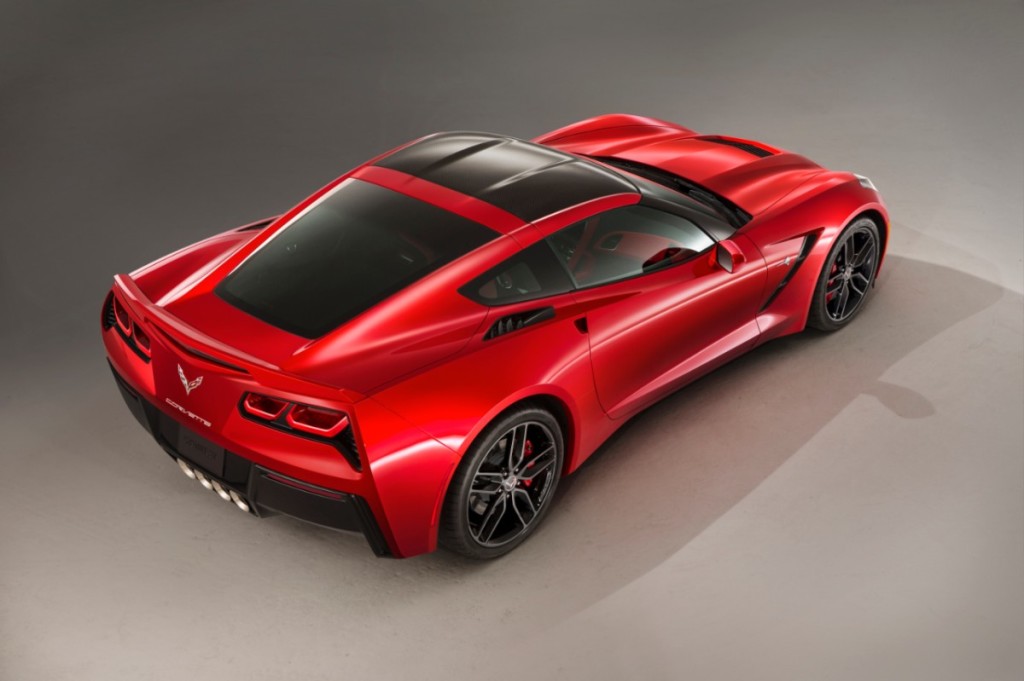
The stunning 2014 Chevrolet Corvette Stingray, first introduced earlier this year at the North American International Auto Show in Detroit, will go on sale this summer with an MSRP that opens at $51,000 for the coupe and $56,000 for the convertible. This means that even though the Stingray was completely redesigned for the new model year, it continues to offer Corvette’s signature combination of velocity and value.
Consider: The entry-model Stingray will holster a brand-new 6.2-liter V-8 engine that delivers about 450 horsepower and 450 lb.-ft. of torque; the base model Audi R8 has two fewer liters of displacement, 20 less horsepower, and a top torque marque that’s more than 100 lb.-ft. below that of the Corvette. Yet it still sells for more than double the price of a Stingray, but Stingray owners enjoy:
- Two transmission choices, including a seven-speed manual transmission with Active Rev Matching or a six-speed paddle-shifting automatic
- A five-position Drive Mode system that can tailor up to 12 different vehicle attributes for optimum performance
- Weight-saving components like a standard carbon-fiber hood (on all models), a carbon-fiber roof panel (on coupes), magnesium-framed seating, and an aluminum body frame that’s 99 lbs. lighter than the previous structure while also being 57 percent stiffer
- Advanced lighting, with high-intensity discharge (HID) and LED illumination
- Dual eight-inch infotainment screens, the next-gen Chevy MyLink system, and a nine-speaker Bose audio system
- For convertible models, a new fully electronic top that can be operated remotely with the key fob
“The 2014 Corvette Stingray perfectly embodies Chevrolet’s mission to deliver more than expected for our customers,” said Chris Perry, vice president, Chevrolet marketing. “The Corvette Stingray delivers a combination of performance, design and technology that very few manufacturers can match, and none can even come close for $52,000.”